Heatit Z-Temp2 thermostat
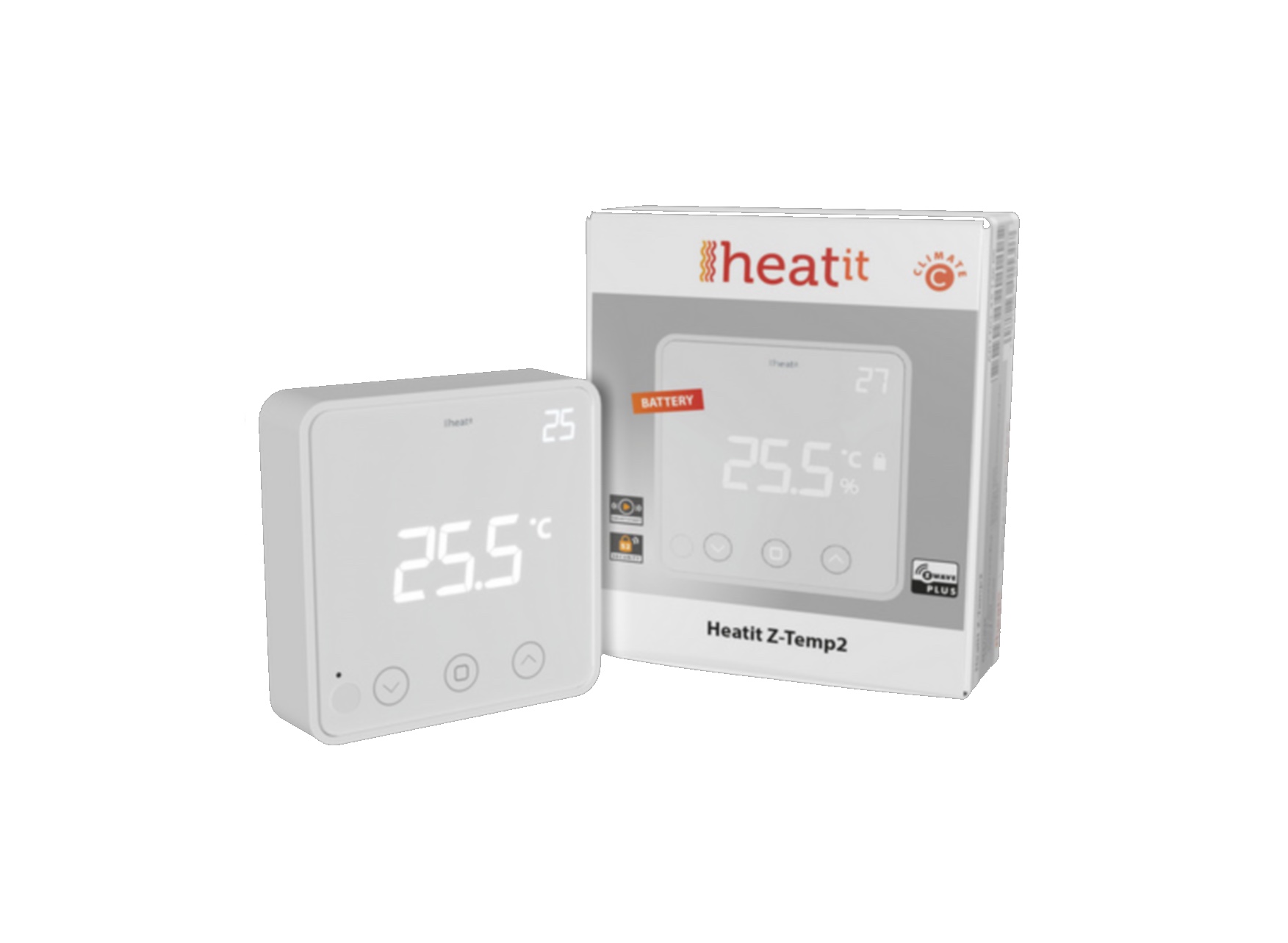
Heatit Z-Temp2 thermostat
Heatit Z-Temp2 is a battery-operated thermostat designed for use with water based heating systems. Used in combination with the Heatit Z-Water regulator you can control your heating system with a Z-Wave primary controller/gateway with the use of Heatit Z-Water in combination with one or several Heatit Z-Temp2. This is a “wire-free” solution, saving both time and money.
All communication between the Heatit Z-Temp2 and the controlled device is 100% wireless. Heatit Z-Temp2 has SmartStart. This feature allows the user to include all devices with SmartStart by scanning the QR codes on the devices.
On startup all the devices will automatically be included in the gateway (requires SmartStart compability). This saves the installer a lot of work. Heatit Z-Temp could also be used in situations where a traditional electrical thermostat is not suited. The thermostat may be combined with the Heatit Z-Relay as the actuator installed in a remote location. The Heatit Z-Temp2 is an excellent choice when restoring or remodeling existing buildings, as it is easy to install without any need for wiring. We recommend using several 230V units to strengthen the mesh network.
Other Details :
- Product : Heatit Z-Temp2 thermostat
- Code : 45 126 66
- Availabiltity : Available
- Series : Heatit
FEATURES
Z-Wave thermostat for controlling external relay
Internal room sensor
Humidity sensor
Proximity sensor to turn on the display
SmartStart
Automatic brightness control
Firmware updates (OTA)
Weekly program/setback via gateway
5 associations
Lock mode/child lock
Supports encryption modes S0, S2 Authenticated Class,
S2 Unauthenticated Class
This product is a security enabled Z-Wave Plus product with
encryption. The product must be used with a security enabled
Z-Wave Controller in order to fully utilize the product.
TECHNICAL DATA
Protocol Z-Wave
Chip Z-Wave 700 chip
Rated voltage 3 x AA batteries (1,5V)
Ambient temperature 0°C to 60°C
Humidity Max. 85% RH
Range RF Min. 40 meters
Hysteresis 0,3°C to 3,0°C (default 0,5°C)
IP Code IP 21
Approvals Z-Wave Plus V2
CE, RED 2014/53/EU, ETSI EN 301 489-1 V2.2.3 (2019-11), ETSI EN 301 489-3 V2.1.1 (2019-03), ETSI EN 300 220-1 V3.1.1 (2017-02), ETSI EN 300 220-2 V3.2.1 (2018-06), EN 62479:2010, EN 62368-1:2014+A11:2017, RoHS 2011/65/EU
-
No Reviews For this product